Centralized Digital Models for System Representation
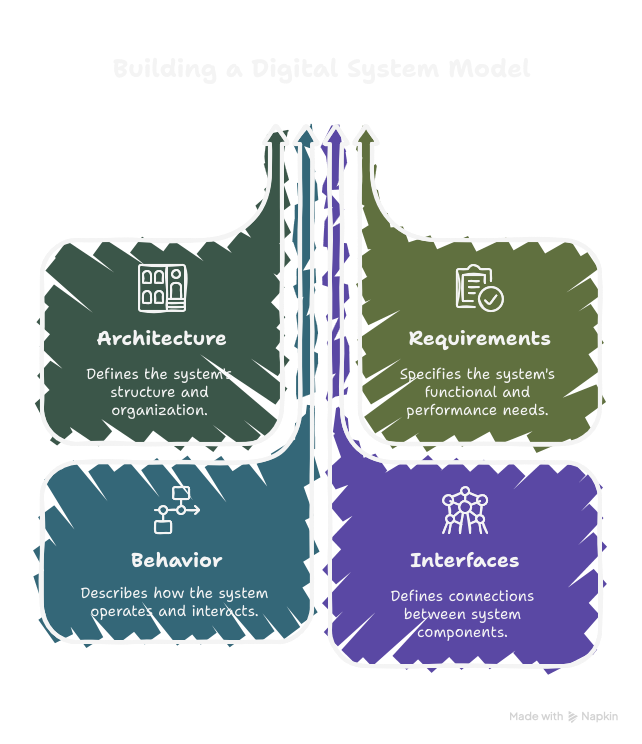
MBSE uses a unified digital model (e.g., SysML, UML) to represent a system's architecture, requirements, behavior, and interfaces. This provides a complete view, like an EV powertrain, ensuring components (battery, motor, control systems) work together.
Traceability and Consistency Across the Development Lifecycle
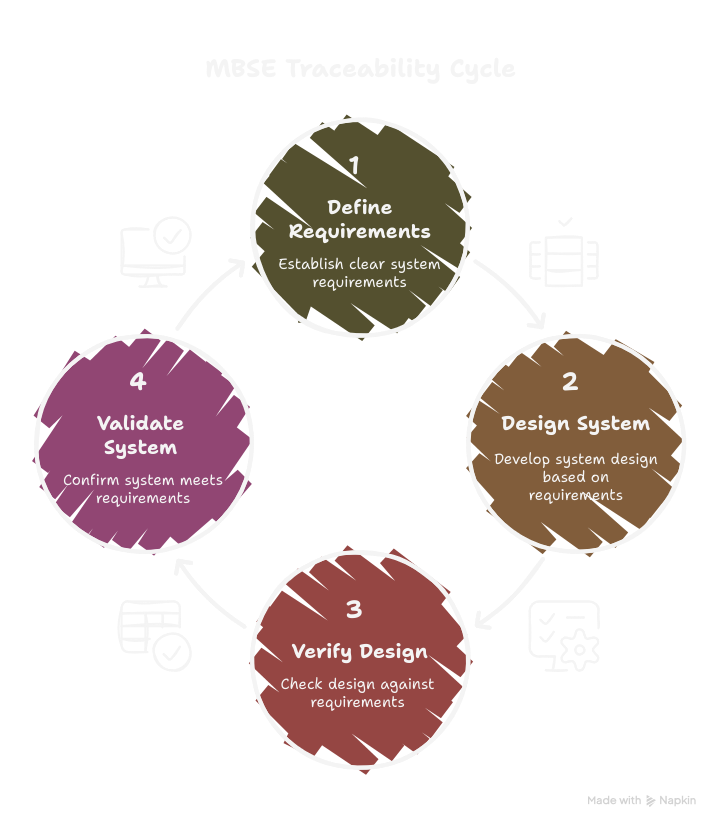
MBSE ensures traceability by connecting requirements, design, verification, and validation in the model, letting engineers track how a requirement (e.g., “EV must achieve 300-mile range”) affects design (e.g., battery capacity) and tests. In automotive, this supports safety and ISO 26262 compliance for EVs, simplifying certification.
Simulation and Analysis for Early Validation
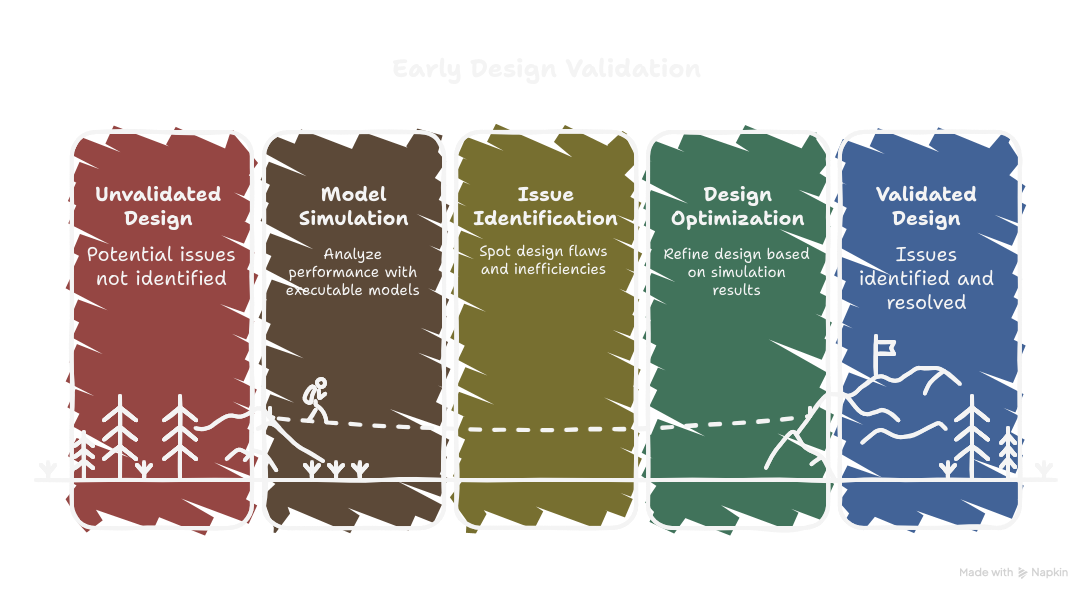
MBSE allows simulation via executable models to analyze performance, spot issues, and validate designs before prototyping. For example, in EV development, it can simulate regenerative braking’s impact on energy efficiency, optimizing without hardware tests.