From SysML to C++ - The MBSE Workflow from System Model to Embedded Code
· 9 min read

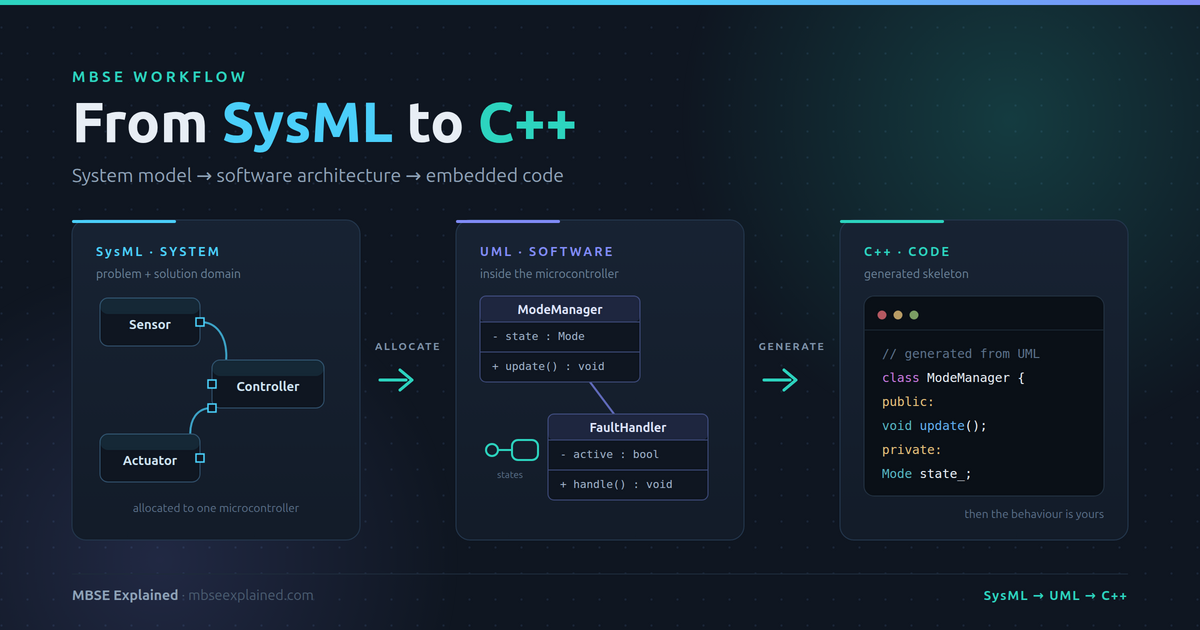 The full chain: SysML for problem and solution domain, UML for the software inside the microcontroller, and generated C++ where it finally becomes code.
The full chain: SysML for problem and solution domain, UML for the software inside the microcontroller, and generated C++ where it finally becomes code.
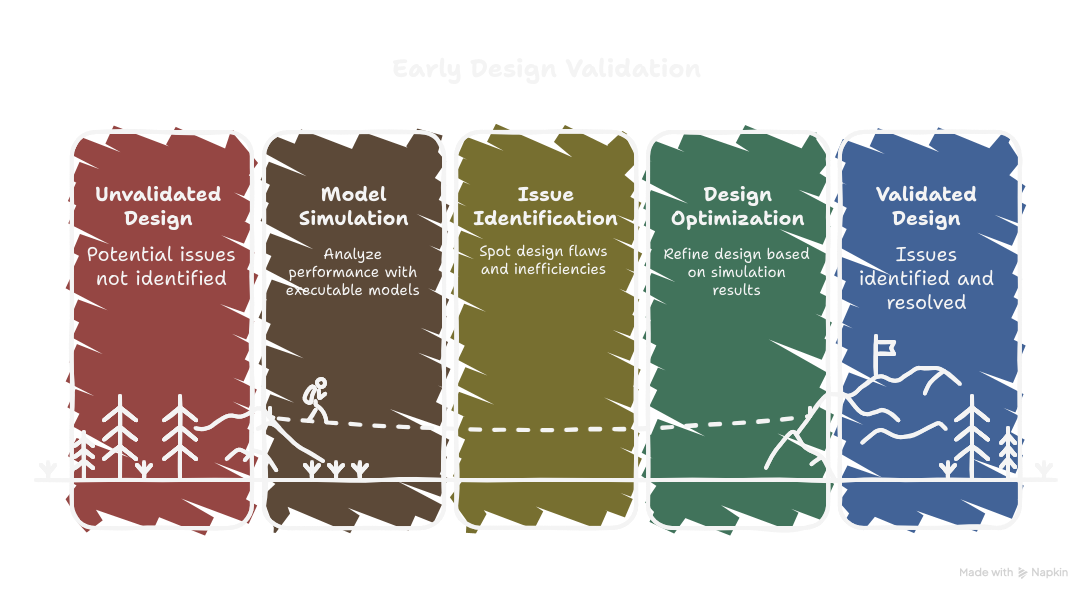 Separating the substance from the marketing: how MBSE models form the backbone of a real digital twin in EV development.
 Applying SysML to battery management and DC-DC converter design across the EV powertrain.
 What actually changed in SysML v2, and how to plan a transition without wrecking an active automotive program.
Welcome back to MBSE Explained! Today, we're diving into one of the most transformative shifts in the automotive industry: the rise of the Software-Defined Vehicle (SDV). Modern cars are no longer just mechanical marvels; they are complex supercomputers on wheels, running on upwards of 300 million lines of code. This explosion in software complexity presents an enormous challenge for traditional development methods. How can automakers manage this digital beast while continuously delivering new features, enhancements, and security patches to customers?
The answer lies in a paradigm shift powered by Model-Based Systems Engineering (MBSE). By creating a modular, resilient, and evolvable software architecture from the ground up, MBSE provides the blueprint for the car of the future—one that improves over time through seamless Over-the-Air (OTA) updates. In this post, we'll explore why MBSE is the critical enabler for the software-defined automotive ecosystem.

SysML v2: The Next Frontier in Automotive System Modeling and why.